
Originally published in Chinese by INSIGHT (INSIGHT视界). Translated by ChinaUnread.
TLDR | AI Summary by ChinaUnread
Peng Gaodi, a 12-year-old sixth grader at Beijing New Talent Academy (BNTA), has already built 186 software products and won a 1-billion-token grant from ByteDance’s Doubao.
His flagship project, the Lintel system, is a “plan-first, generate later” engineering framework for prompting AI — designed to fix the messy, unmaintainable code that comes out of typical vibe-coding.
His school, BNTA, runs a 15-year continuous K-12 program organized as “a vast plain and a soaring peak” — universal STEM literacy for everyone, plus tailored ramps for outliers like Gaodi, including a real on-campus “Entrepreneur Program” that funds student startups up to ¥30,000.
The deeper takeaway: in an era of overseas-returnee master’s grads getting flattened by China’s job market, the “super” in “super primary schooler” isn’t an early lead in knowledge — it’s the awakening of self-driven motivation, the moment a kid starts coding to solve real problems instead of for grades.
Lately a particular group keeps showing up on Chinese social media that makes adults collectively “break down” — the “super high schoolers.”
While plenty of grads from China’s elite “985” universities and overseas top schools are still bouncing around the résumé screen, pulling all-nighters in big-tech cubicles for one PowerPoint deck, this generation of kids has been quietly rising: 17 years old, five years of work experience, designing their own chips, hand-rolling their own operating systems.
If you think that’s the ceiling, you probably haven’t met the “super primary schoolers” yet.
I recently got to know a 12-year-old boy named Peng Gaodi. Still only in sixth grade, he has already developed 186 software products and pulled in a 1-billion-token grant from Douyin (Doubao). At the moment he is taking his newest project — a second-hand trading platform — into his school’s “Entrepreneur Program.” And the Lintel system he developed effectively cracks the underlying problem of how to give AI precise instructions, filling a gap in the current market for AI engineering frameworks.
Because of his beyond-his-years professionalism in tech and his obsessive depth of focus, even teachers at school will half-jokingly call him “Teacher Peng” behind his back.
I was honestly curious: what on earth has happened with this 12-year-old? Innate genius, or some special educational soil that “grew” him?
To find out, I went to his school — Beijing New Talent Academy (BNTA), a school that encourages students to start companies on campus.
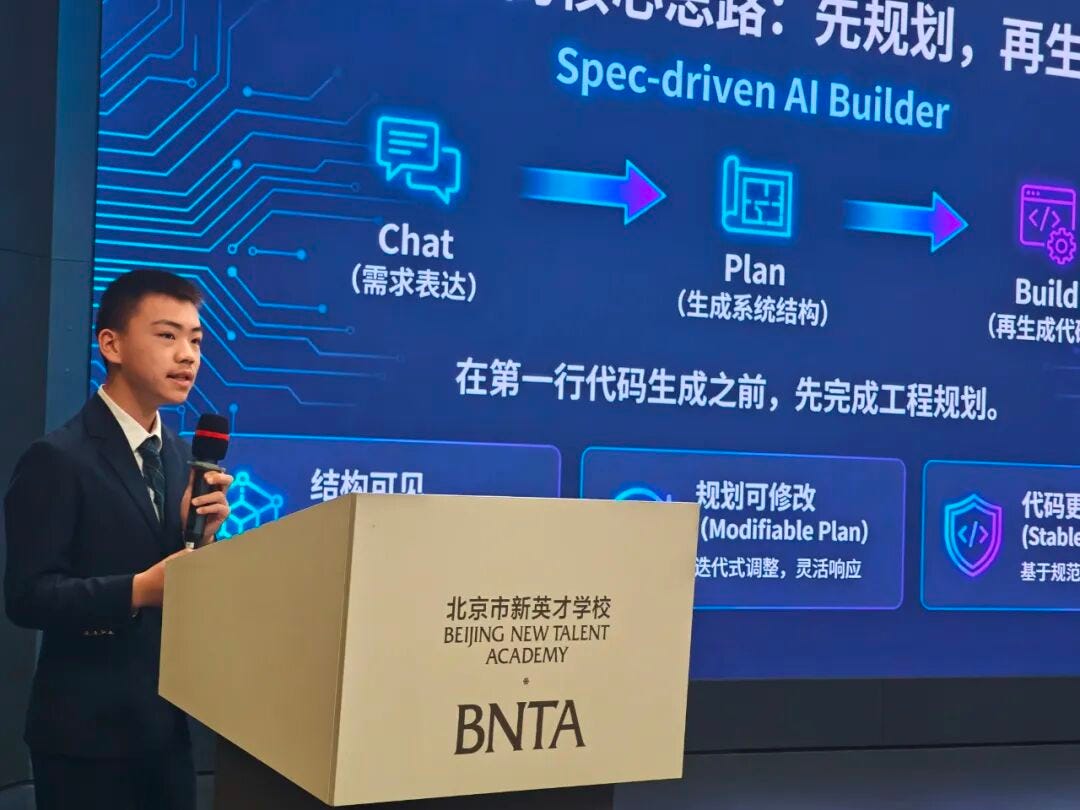
01. The “Young Geek” behind 186 software products
On a Monday morning at the BNTA campus, I spotted Peng Gaodi from a distance — a boy whose sharp wits show on his face the moment you see him.
In the interview his mind moved fast — often the idea was already out there before his mouth could catch up with the frequency of his thinking. Especially when the topic turned to tech, his strong suit, he flipped into “non-stop talking” mode. The confidence is bone-deep.
Gaodi’s fate with BNTA started in first grade. When his family came to tour schools, he was instantly drawn in by its Digital and Science Center. In that classroom full of “little tech gadgets,” Gaodi seemed to find a kind of resonance; the whole family agreed on the spot — this was where he would study.
Gaodi told me his first-grade birthday gift was nothing like other kids’. While his peers were still nagging their parents for toys and game consoles, he asked his mom for a 3D printer. That machine became his “ticket of admission” into the digital world. While other kids were still trying to wrap their heads around abstract math equations, Gaodi was already studying how to use 3D modeling to make his imagination tangible.
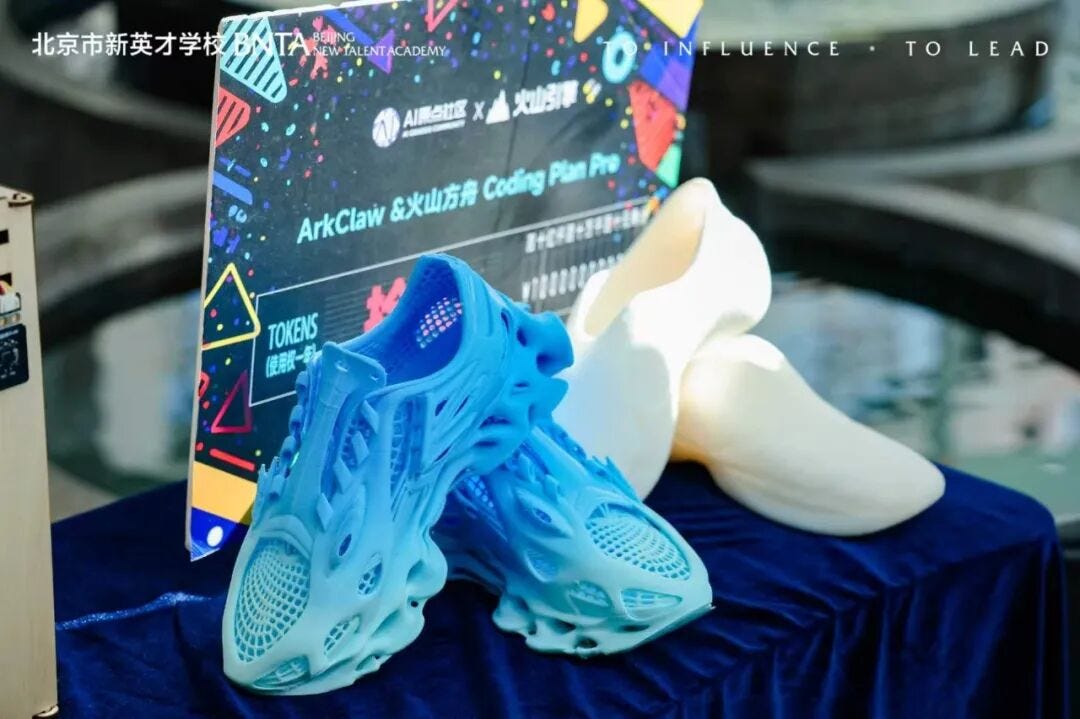
This obsession with underlying logic took root quickly in BNTA’s soil.
In third grade he took an elective in C++ programming, one of the school’s signature courses, where the teacher led the kids into the world of code through gamified lessons. By fourth grade, Gaodi was showing the kind of “cliff-edge” lead that makes everyone notice. On the strength of his startling logical-thinking ability, he was specially recruited into the school’s competitive Informatics Team, breaking the usual age rules — he is currently the only primary schooler on the squad.
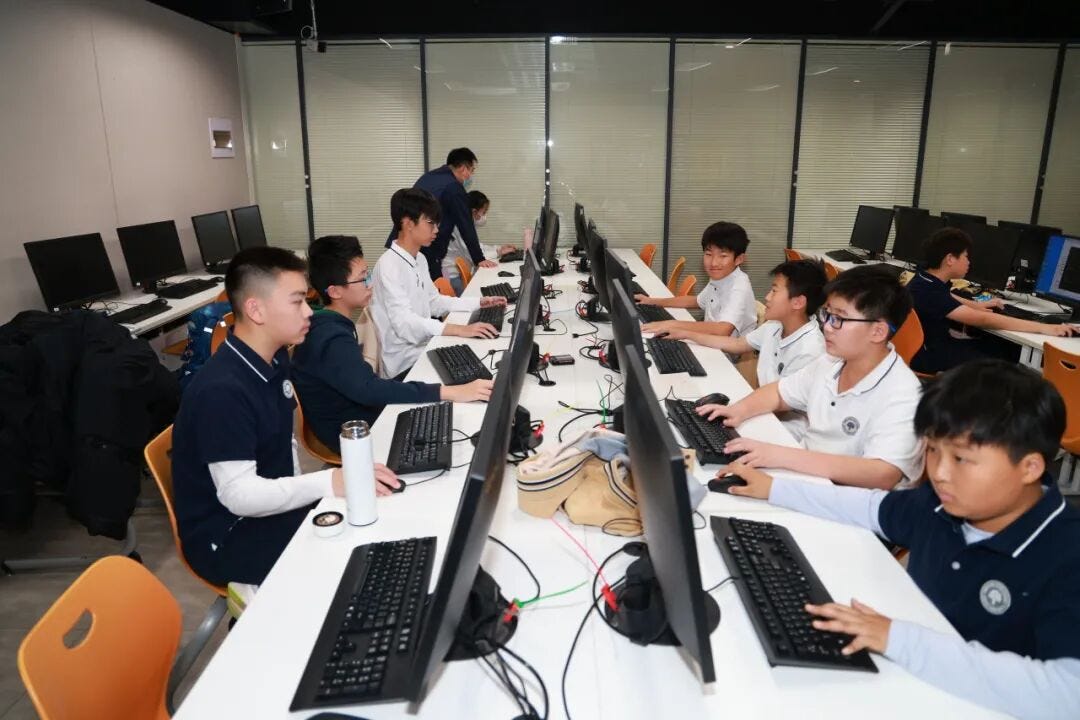
When the conversation turned to his projects, the boy’s eyes lit up immediately.
He told me: “The value of technology should lie in solving real problems.” Gaodi sharply observed the chaos teachers ran into when trying to trade second-hand items in WeChat groups: messages flying by, info hard to line up.
So, with a teacher’s guidance, he just turned around and hand-built the BNTA campus second-hand trading platform. The platform doesn’t only run HTML/CSS on the front end and connect to a SQL database on the back end — he even configured an AI moderation system on top of it.
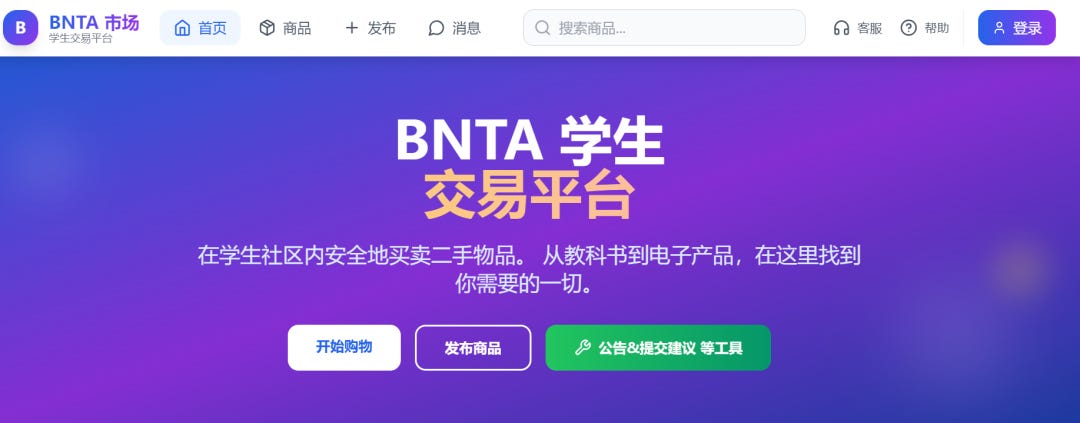
“The marketing isn’t really there yet, and the user-registration flow is still a bit clunky, so I joined the school’s Entrepreneur Program. Once I get the funding, I plan to put the focus on marketing,” Gaodi analyzed, like a seasoned founder.
The “Entrepreneur Program” he mentioned is one of BNTA’s signature initiatives, now in its second edition. It encourages kids to draft business plans around community service, technological innovation, and sustainable development, competing for up to ¥30,000 in startup funding. In the first edition last year, Gaodi and his teammates developed “Tai Yi Xuan Dian” (太乙玄典) — a project that fused 3D interaction with a dynamic character-relationship knowledge graph, attempting to help Chinese culture “go global,” and won the “Best Pitch” award outright.
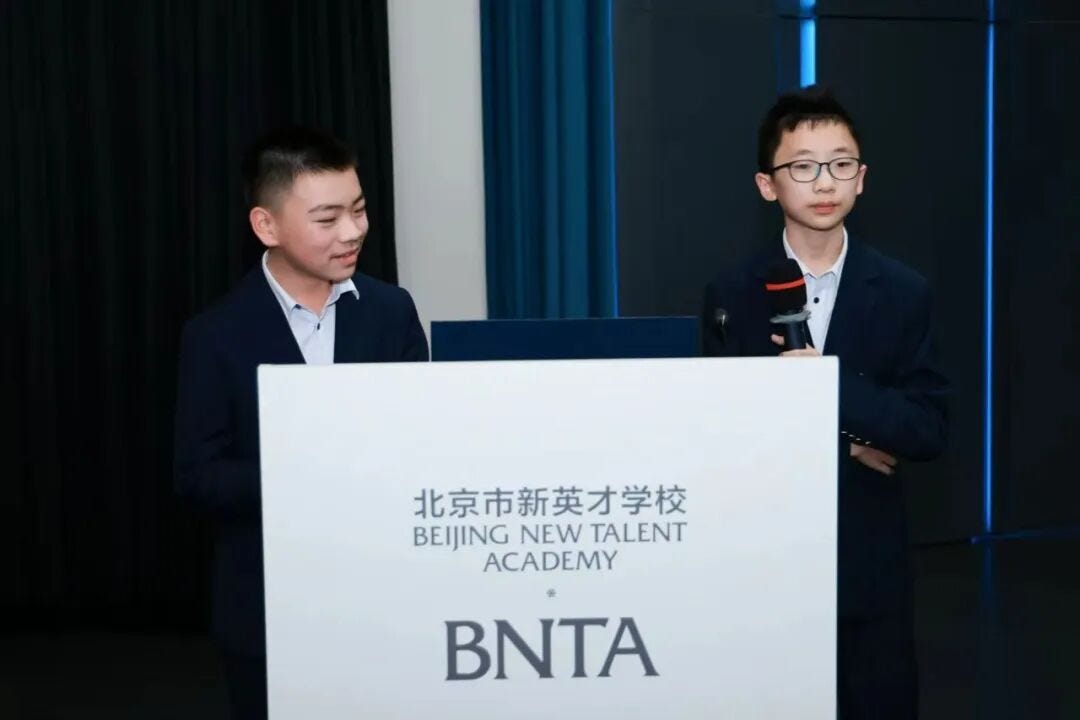
Of course, Gaodi’s most hardcore output to date has to be the Lintel system.
In today’s era of AI-powered coding, plenty of people are used to just reaching out and asking the AI for code, but Gaodi spotted a pain point:
“A lot of people use AI like building a skyscraper out of wooden sticks — looks tall, but the underlying logic is a mess and won’t hold up.”
So he developed Lintel — not just simple prompt generation, but a whole “plan first, generate later” engineered build approach, trying to solve from the ground up the problem of how to give AI precise instructions. To some extent it fills a gap in the market, and its rigorous logical architecture has even had quite a few adult developers admitting they can’t match it.
The interesting thing is that on Gaodi himself, you can’t see a single trace of the tense, “hyper-managed” quality of a tiger-parented kid. His sixth-grade life isn’t trapped in a sea of practice problems — it’s spent “wildly soaking in oxygen” inside the school’s rich curriculum, becoming sharper and more outstanding all the time.
He isn’t only a coding master in front of a computer; he’s also a fierce little defender on the soccer field. He loves pop music and is obsessed with classical, has been practicing piano since kindergarten, and is already a regular at piano recitals.
Last year at the “In the Name of Love” charity concert, he and his classmates performed a “Classical Music Medley” together, using notes to care for children with special needs; at this year’s welcome concert, his rendition of “Maple Leaf Rag” stunned the audience.
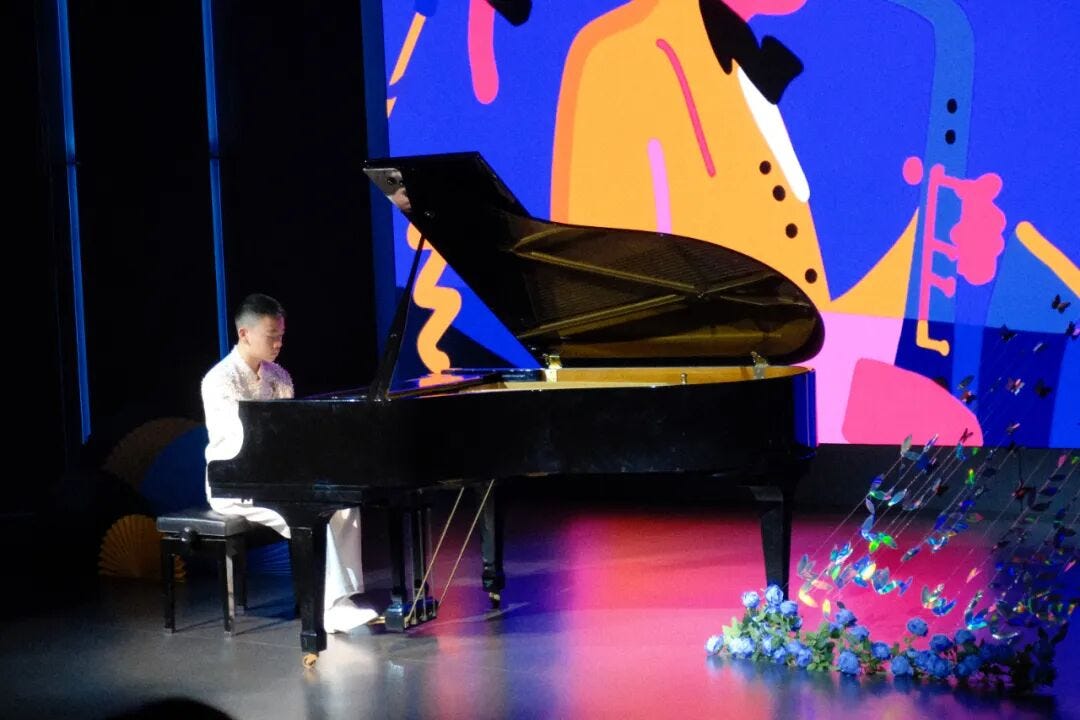
When we praised him, he suddenly smiled shyly: “I just like making weird little things.”
That ease comes from a deep sense of mastery — when a child learns to define his own tools, he gains the power to define his world.
02. “Teacher Peng” — running a little too fast
In the office of BNTA’s Digital and Science Center, a particular scene plays out often: teachers are at their computers busy preparing lessons, when Peng Gaodi pushes the door open like he owns the place, pulls up a chair, sits down, and starts chatting with them about the latest AI tools or the parameter logic of some large model.
Every time Wei Yiran — head of the AI education group at the school’s Digital and Science Center — pictures that scene, she finds it remarkable.
She has watched Peng Gaodi grow up. In her memory, the kid who first pushed open that door was still a chubby little “bean sprout.” In what felt like an instant he shed the babyish look and became this teenager with airtight logic. As a former product manager at a major tech company, Wei knows full well that for a kid like Gaodi, the traditional “pruning” style of education would only be a drain on him.
“With Gaodi, we’re in no hurry to teach him things. The most important role is to see him, to keep him company, to talk with him as an equal.”
Under that kind of “seeing,” the school never insists he march at the unified pace; instead, it leaves him plenty of “blank ground for free growth.”
Wei told us that even though Gaodi is highly capable and can build dazzling products with AI, he is still only a primary schooler, and being on a campus inevitably limits his field of vision. So what the school has to do is provide him with thicker resource scaffolding — sometimes that’s extra targeted tutoring, sometimes it’s breaking down the campus walls.
For example, Wei has personally taken Gaodi to a tech company as a “one-day intern,” brought him to Zhongguancun’s “Origin Party Nights” events, and let him talk directly with the founders and engineers who are changing the world.
This kind of “career-exploration program” is another BNTA hallmark. The school matches outside resources to each student’s interests and walks the kids into law firms, hospitals, media companies, and more — all to broaden their view, embrace industries earlier, and connect with the more real world.
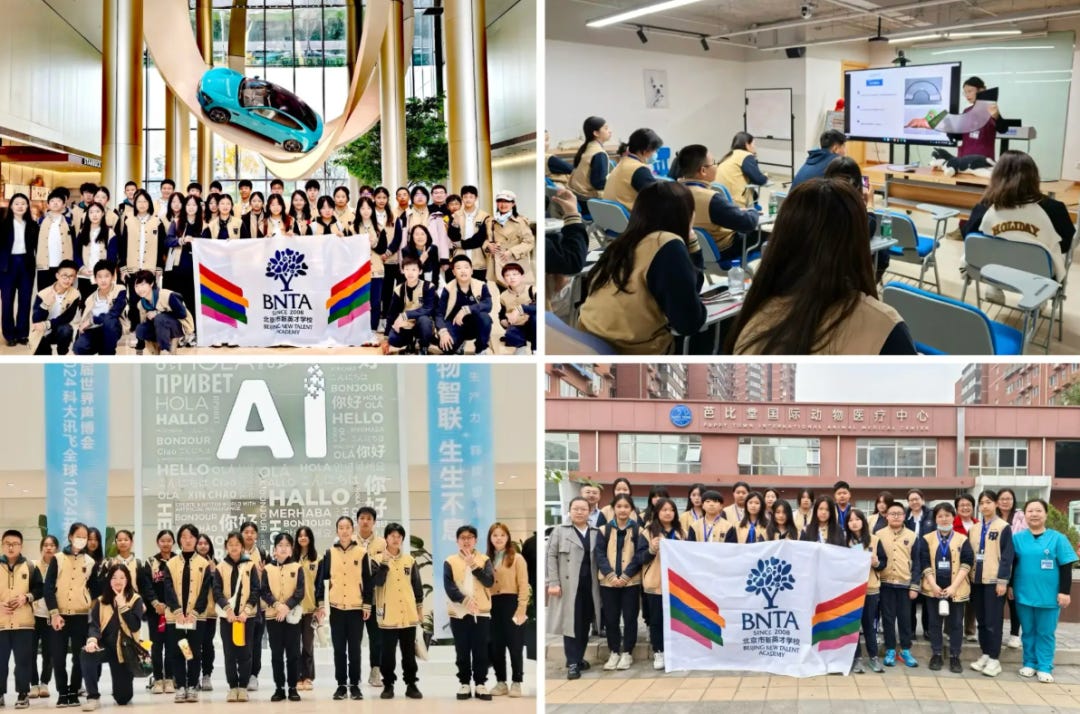
This kind of precise individualized lift-up is backed by BNTA’s whole “vast plain and soaring peaks” STEM-and-innovation education system. BNTA fully leverages the advantage of being a continuous K-12 (15-year) school, threading STEM-and-innovation education through every stage like capillaries:
In the primary school stage — that is the “plain” that lays down the base color. Through STEM courses like creative hardware, VEX robotics, and the Little Geek Club, plus humanities tracks like 3D Creative Design and AI Creator, the school guides students to find joy at the intersection of science and the humanities;
By middle school, students start touching underwater robotics, digital science, WWDC and similar courses, deepening their logical thinking;
And by high school, the curriculum moves toward specialization — practical courses like simulated flight and artificial intelligence connect directly to future academic research and career paths.
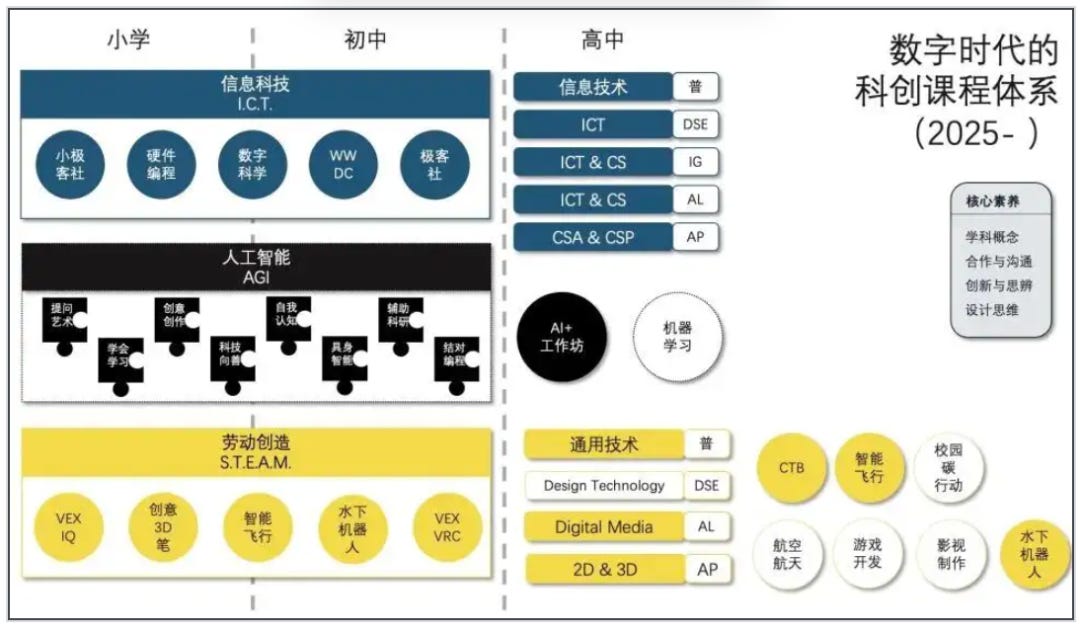
This builds a stable STEM-and-innovation “pyramid”:
The “plain” is the universal, all-students curriculum, making sure every kid touches frontier digital literacy.
At the same time, the school deeply integrates competition into regular teaching, achieving “competition for all.” This kind of competition isn’t for selection or about chasing rankings — it uses the contest as practice, letting students discover their own bright spots while seeing the wider world beyond campus.
The “Challenger Program” launched last year goes further, using a layered design to lay out a personalized leveling-up path for every student:
1. Encouraged for most students: interest-driven contests that build kids’ ability to think and their confidence in solving problems;
2. Recommended for some students: stepping into more academically demanding arenas, taking initial challenges, sharpening targeted skills;
3. Suited for the few with special talent or thorough preparation: testing students’ integrated learning and applied knowledge, putting them through intense honing and deepening;
4. Requires school selection: top-performing students get the chance to take the international stage and compete with outstanding youth from around the world.
For students like Gaodi who show special potential, the school has built a systematic ladder for advancement, letting them keep climbing toward the “peaks.”
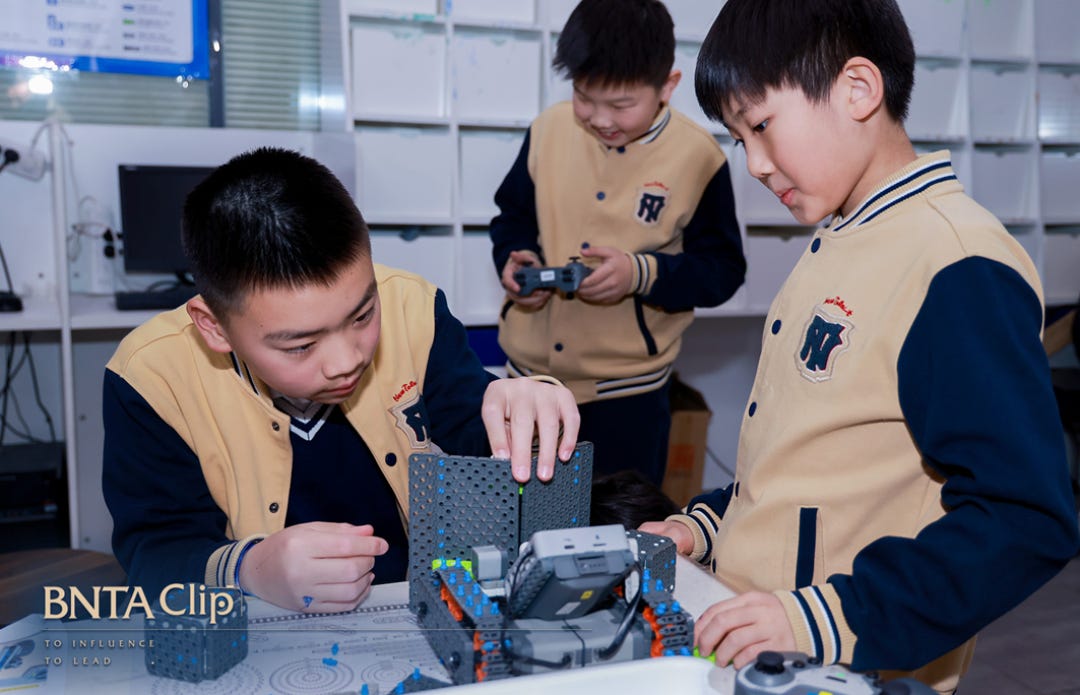
The “BNTA Youth Academic Forum,” for example, is an open, rigorous, high-standard academic exchange platform for secondary students that BNTA itself launched. Here the school invites front-line professionals from industry, business, and academia, letting students make more connections to the real world and discuss frontier academic questions with industry heavyweights.
On top of that, the school divides four major STEM-and-innovation school teams — Informatics, Linguistics, Engineering, and Robotics — along the dimensions of abstract thinking, hands-on operation, deep inquiry, and broad knowledge, and has set up the BNTA Science Camp, building reserves of energy for tomorrow’s scientists and engineers.
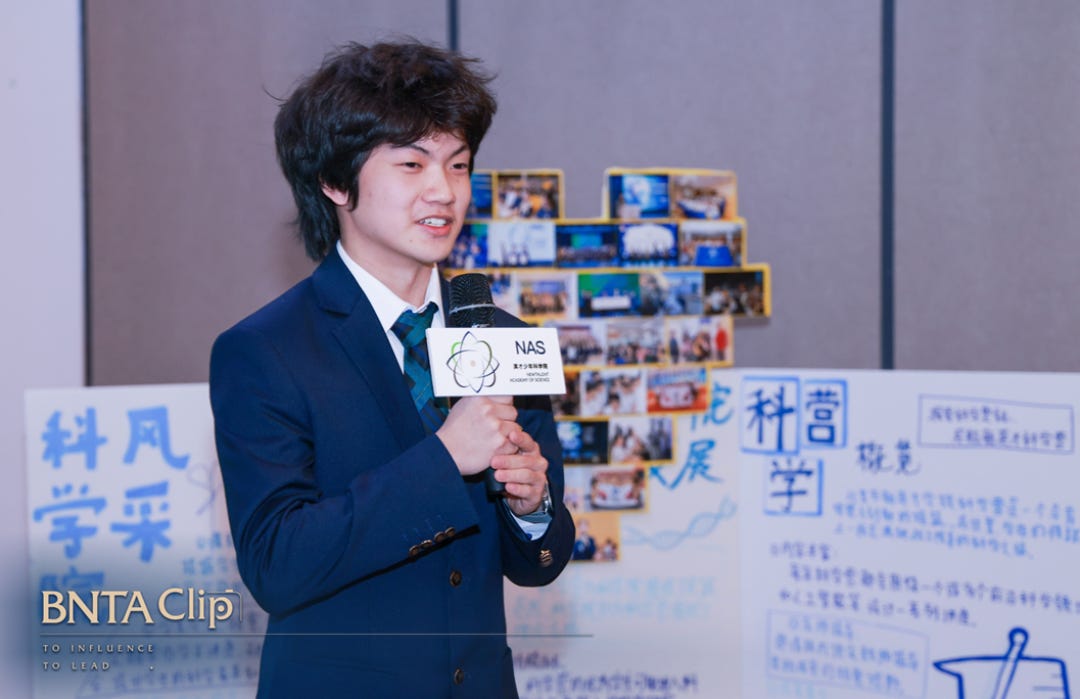
In BNTA’s view, top innovative talent does not have to come from “cherry-picking” — as long as the soil is fertile enough, an “ordinary kid” can also grow into the kind of top-tier talent the future needs.
Just as Wei put it, the meaning of the school’s existence is not to stuff children into standardized molds, but to pave a track for them when they decide to run, and to lift them with everything it has when they want to fly.
03. Stories like this — there is more than one
Plenty of people might think Gaodi is a non-replicable genius, but really he is just the inevitable story that grows out of an ecosystem that “allows children to be themselves.”
At BNTA, kids like Gaodi who don’t “walk the usual road” are not rare.
I’ve met a kid here who has been seriously training piano at school since first grade. Even when he eventually decided to take the domestic gaokao route, the school did not make him put away that “useless work” to cram practice problems — instead it specifically held a personal piano recital for him.
In BNTA’s value hierarchy, passion and academics have never been a single-choice question.
That inclusiveness shows in the school’s extraordinarily diverse track support: whether a kid chooses the domestic gaokao, dives deep into AP, A-Level, HKDSE and other international curricula, heads to Germany to study, or even seeks a breakthrough in art or athletics — the school will give it everything, providing full backing for kids in every direction.
That kind of backing can sometimes change the very base color of a kid’s life.
There was once a boy whose habits were a little loose, who was always zoning out in class. After he was exposed to coding at the Digital and Science Center, a teacher took him to a competition and he won second place. The 500 yuan in prize money and that previously unknown sense of accomplishment instantly lit up his inner drive.
This semester, his subject teachers are amazed at the change. The kid who once “wouldn’t listen” — because he found his confidence in the world of code — is becoming focused and considerate.
An even more interesting case happened in the high school division. A student, under teachers’ guidance, has already kicked off a real entrepreneurship project — from agency contracts for stringing badminton rackets and lining up regular suppliers, to laying down a sales channel reaching badminton venues in Mentougou, and now even getting into solar panels.
At BNTA, the campus feels more like a large “startup incubator.” The school not only provides advice and funding support; teachers, like professional investment advisors, will also “hit the brakes” at key moments to help them dodge risks.
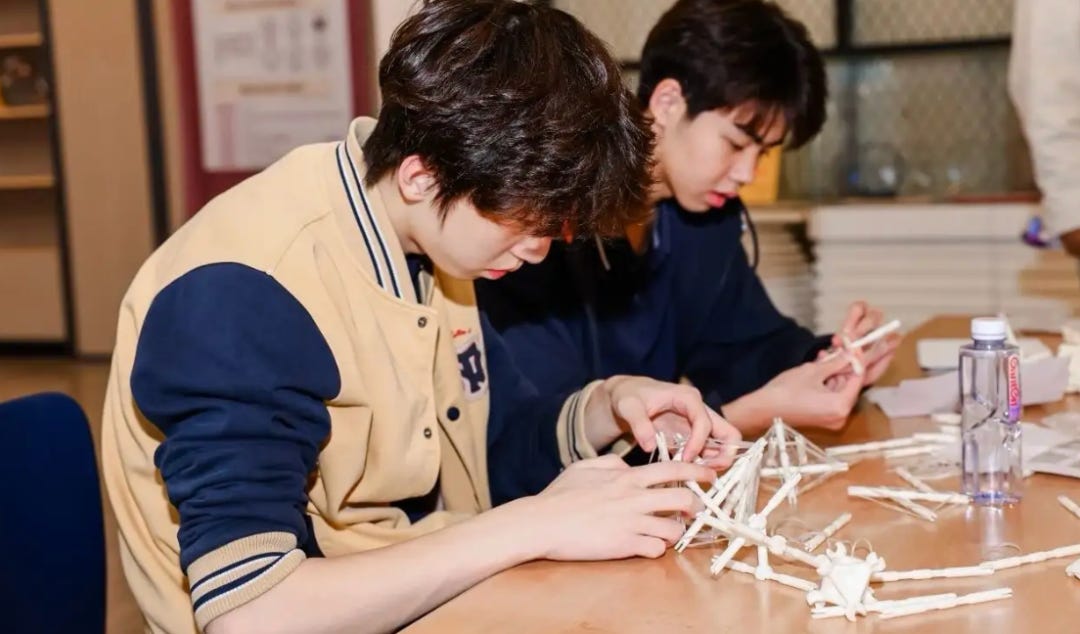
BNTA never tries to trim every kid into the standardized shape that elite universities want. Instead, it puts resources behind each person’s nature.
Take the “Entrepreneur Program” mentioned earlier — it is by no means a contest that ends once you’ve collected the prize, but a full support system, encouraging kids to convert their wild ideas into real social value.
This also explains the philosophy BNTA principal Liu Wei always emphasizes: “Embrace the real world, try out more connections.” As long as a kid wants to try, the school is responsible for building the platform, letting students touch, sense, and solve real problems in real settings.
In an era over-pursuing standardization, BNTA does not provide a factory-style assembly line, but rather a “tropical rainforest” with abundant nutrients, diverse species, allowing competition while also allowing coexistence.
Here, the trees can soar, the shrubs can flower, and the lichens can spread freely too.
On the way back to the office from BNTA, I kept thinking about what the word “super” really means — maybe not an early lead in knowledge, but the “awakening of inner drive.” When a teenager stops coding for grades and starts building systems to solve real pain points, that self-generated power is the most core competitiveness.
This fits exactly with the era’s question for STEM-and-innovation education today: from responding to the national strategy of cultivating top talent, to meeting the literacy demands of cross-disciplinary problem-solving, BNTA is trying to break down the walls of education and let learning return to the real world.
Most of us grew up on the “assembly line” — used to passively receiving instructions. Kids of Gaodi’s generation are practicing how to define the world.
(Cover image and article images courtesy of INSIGHT.)
"Building a skyscraper out of wooden sticks" is such a good diagnosis of how most people use AI for code. The fact that a 12-year-old identified it and built a structural solution is almost too on the nose. The part about him pushing open the teachers' office door to chat about large model parameters like he owns the place is my favorite image in this piece 😄
This was such a fascinating read! I love that you did not only focus on Peng Gaodi and instead, you painted a picture of the ecosystem that contributed to his greatness. I admire the schools approach of teaching their students foundational principles, allowing them to discover their passions and then supporting them in deepening their knowledge and broadening their experiences related to that passion. More schools should be like BNTA!